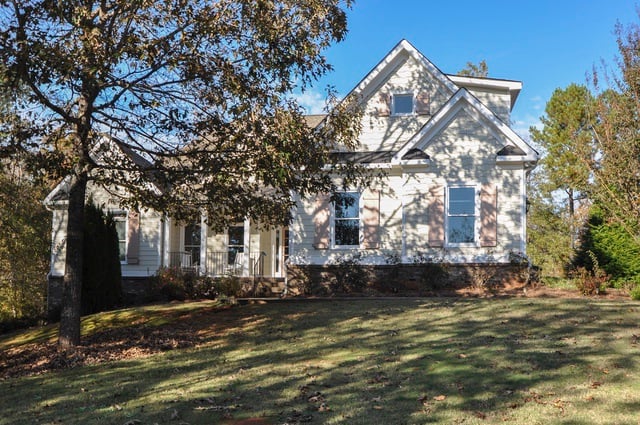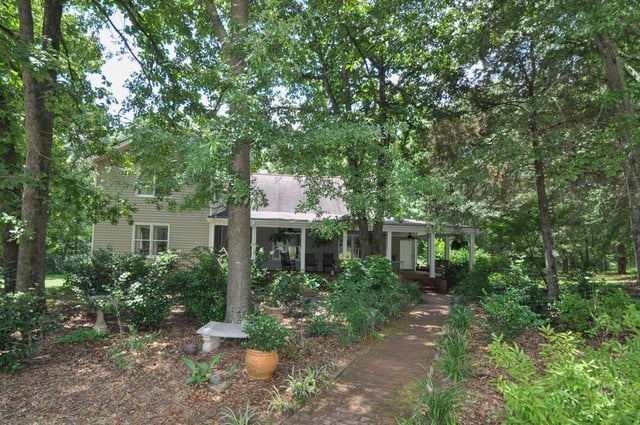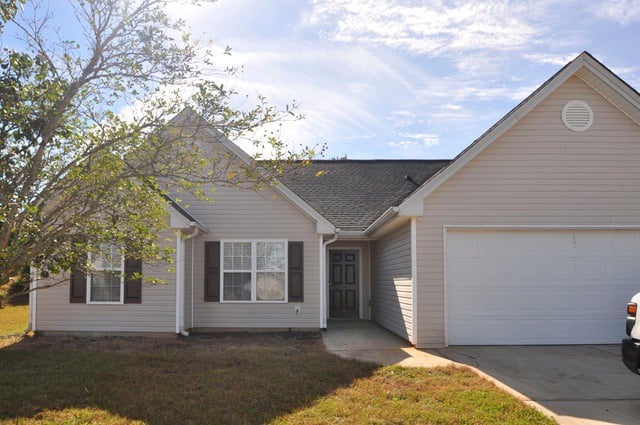
Ask that question in a Facebook group for Madison County land buyers and you'll get five different answers, usually delivered with total confidence. Three acres minimum. Five, if you want room for a repair field. Two, if the soil percs well. Everyone has a number. Almost none of them got it from the county.
The real answer, according to the office that actually issues the permit, is that there isn't one. Madison County's Environmental Health office doesn't set a fixed acreage floor for a septic system. What it evaluates is the house you're planning to build, where the driveway and water line will run, and what the soil does when they dig test pits on your specific parcel. That distinction matters more than it sounds like it should, because it changes what a buyer or a small investor should actually be checking before they fall in love with an acreage number on a listing sheet.
Where the "you need X acres" rule comes from
The myth isn't baseless. Georgia's Department of Public Health does publish a reference figure in its statewide manual for on-site sewage systems: roughly one acre as a general benchmark for a lot served by septic, and about half an acre where public water and sewer are both available. That number gets repeated often enough that it hardens into something people treat as law. It isn't. The DPH manual itself notes that county boards of health can set their own minimums, and many rural Georgia counties simply don't enforce a blanket lot-size rule at all. They evaluate case by case.
Madison County is one of them. The county's on-site wastewater septic program addresses this directly in its own public FAQ: the amount of property required for a permit depends on the proposed house size, the driveway and water supply layout, and the site conditions the health department finds when it digs. No acreage floor. No shortcut. Just a site visit.
What the county is actually looking for
If acreage isn't the gatekeeper, something else is. A typical septic evaluation near Hull comes down to a handful of measurable things, most of which have nothing to do with how many acres are on the deed.
| What buyers assume matters | What the county actually evaluates |
|---|---|
| Total lot acreage | Soil percolation results from test pits |
| A round number like "3 acres minimum" | Proposed house size and bedroom count |
| Distance from the road | Placement of driveway and water supply lines |
| Whether the lot "looks big enough" | Setback distances from wells, property lines, and water sources |
Georgia's statewide setback standards, which Madison County follows, require a septic tank to sit at least 50 feet from a well, a drain field at least 100 feet away, and a cesspool at least 150 feet away. Those distances, combined with the shape of the usable soil on a given parcel, do more to determine buildability than the number printed in a listing description ever will. A narrow five-acre tract with poor percolation and an awkward driveway easement can be harder to permit than a well-drained two-acre lot with a clean layout.
The real ceiling isn't the septic system
Here's where it gets more interesting for anyone thinking about land near Hull as an investment rather than a single homesite. Even once a septic permit is squared away, Madison County's land-use rules put a hard cap on what you can actually do with a tract, and none of these caps are measured in acres either.
- The county's septic program FAQ states plainly that no more than two dwellings are allowed on one tract, which rules out casually splitting a parcel into a small multi-home rental play without going through formal subdivision.
- A private drive or easement can serve at most four lots, must be at least 30 feet wide, and cannot exceed 1,500 feet in length, according to Madison County's Planning and Zoning office. That length limit alone eliminates a lot of long, narrow parcels from ever supporting a multi-lot driveway.
- A property can only be split three times, for a maximum of four resulting lots, within any three-year window before it falls into full major subdivision regulations, which bring their own engineering, road, and infrastructure requirements.
For a builder or investor evaluating a tract for a duplex, an accessory structure, or a small infill project, these three rules matter more than the acreage total on the survey. A 20-acre parcel that's already been split twice in the last two years has one split left before triggering subdivision review. A 3-acre parcel that's never been touched has more flexibility on paper, even though it's smaller.
Two tracts near Hull, two completely different equations
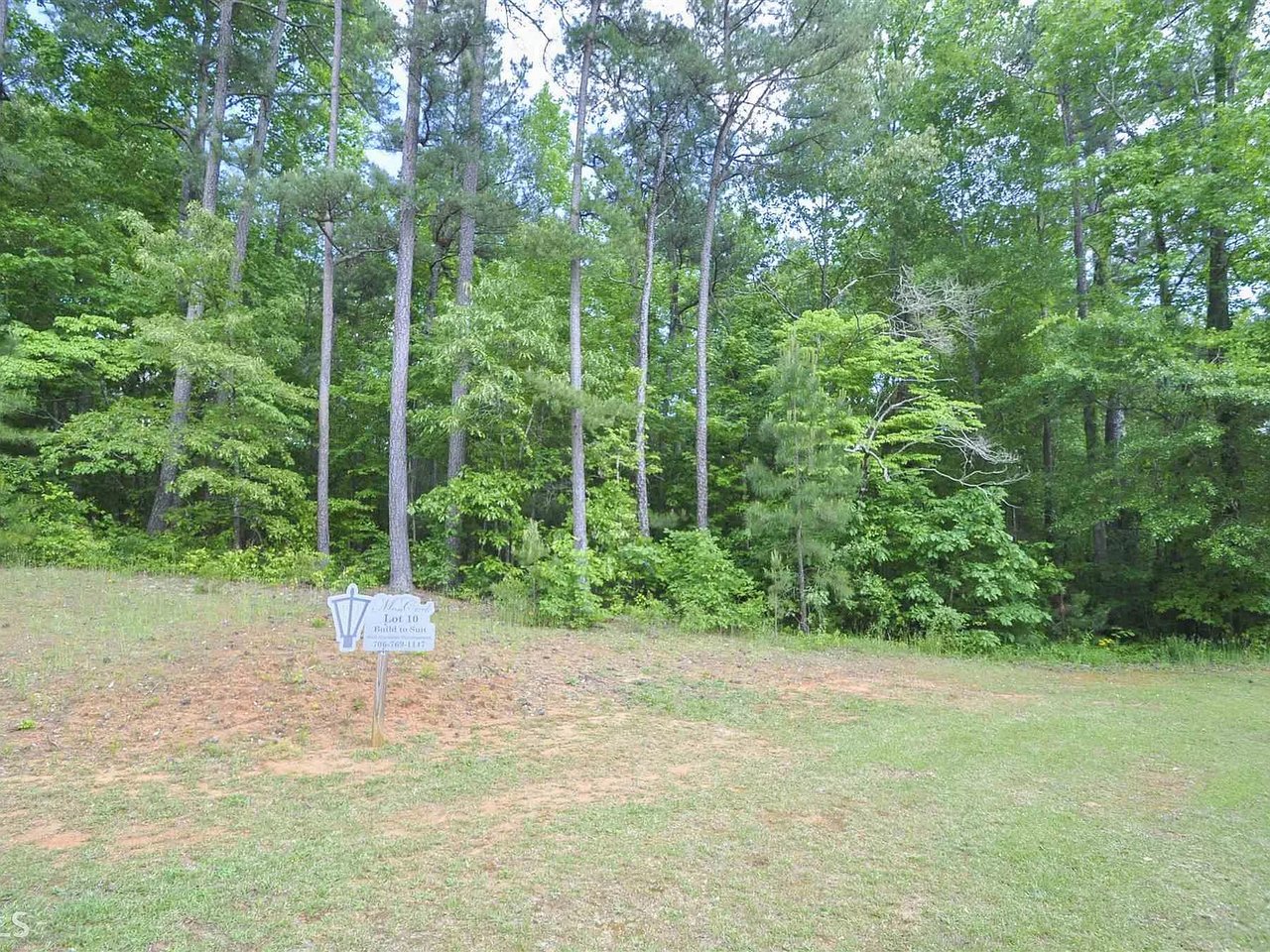
A 9.05-acre A1-zoned tract on Highway 106 South in Hull illustrates the site-by-site logic well. The listing notes a satisfactory perc test already on file and public water available at the road, two details that do far more to establish buildability than the acreage figure in the headline. A buyer looking at that parcel isn't relying on a rule of thumb. The percolation work is already done.
Compare that to a 91.9-acre tract at the high-traffic corner of Highway 29 and Highway 106 in Hull, positioned across from Ingles and next to Waffle House and Family Dollar. That property's marketing points to something entirely different: potential access to as much as 25,000 gallons of sewer capacity from a lift station on the adjacent parcel. When public sewer capacity is on the table, the whole septic acreage conversation becomes irrelevant. The constraint shifts from soil science to utility engineering, and the math a buyer needs to run changes completely.
Two tracts, both in Hull, both measured in acres, and neither one's buildability comes down to the number of acres involved.
The per-acre price tag is just as slippery
Land pricing in Madison County shows a similar pattern once you look past the headline number. Data aggregated from larger rural listings (properties over 10 acres) puts the median price per acre for Madison County land in the range of $15,000 to $24,000. But when smaller parcels are included in the average, the per-acre figure jumps to roughly $43,500, based on a broader pull of active Madison County land listings. That's nearly triple the large-tract median, and it's not because land got more valuable. It's because small lots simply carry a higher fixed cost per acre than large ones do. A buyer comparing a 2-acre listing to a 40-acre listing on a pure price-per-acre basis is comparing two different markets, not two versions of the same one.
Zoom out and the broader county picture backs up why this level of detail is worth tracking now. Zillow's home value index has Madison County's average home value up 4.4% year over year as of its most recent reading, and population estimates cited alongside the Highway 29/106 listing put county growth at roughly 16.69% between 2010 and 2024, reaching an estimated 32,932 residents with an annual growth rate near 2.3%. A county absorbing that kind of growth is exactly the kind of place where land-use rules that used to be academic start mattering to ordinary buyers.
Before you put an offer on raw land near Hull
None of this means acreage is meaningless. It means acreage is one input among several, and treating it as the whole answer leads buyers to skip the steps that actually determine whether a tract works for their plans. A soil evaluation, a check on the parcel's split history with the county, and a look at how any existing driveway or easement is configured will tell you more than the number on the plat.
If a septic system is already installed and functioning, a pre-purchase inspection is still worth the money even though Georgia has no statewide law requiring one. Lenders on FHA, VA, and most conventional loans will require proof of a working system before closing regardless, and a standard inspection runs somewhere between $250 and $600, with a full Performance Evaluation Report (the Form 14.L that most Georgia lenders treat as the gold standard) closer to $400 to $600. That's a small number next to the $10,000 to $30,000 a failed system can knock off a sale price, or the $6,397 to $7,600 a new conventional system typically costs to install on cooperative soil, more if the ground fights back.
Frequently Asked Questions
Do I need a certain number of acres to install a septic system near Hull? No fixed number exists in Madison County. The health department evaluates house size, driveway and water line placement, and soil conditions on the specific parcel rather than applying a blanket acreage minimum.
How many homes can I put on one tract in Madison County? The county's septic program limits a single tract to two dwellings. Going beyond that, or splitting a parcel more than three times within three years, moves the property into formal subdivision review with its own set of requirements.
What if the land I'm considering has already been split from a larger parcel? Ask how many times it's been split and when. Madison County caps minor splits at three within a rolling three-year period for a maximum of four resulting lots. A parcel that's already used up that allowance has less flexibility than its size alone would suggest.
Land near Hull rewards buyers who read past the acreage line. If you're evaluating a tract for a homesite, a small development, or an investment property and want someone who can walk the site-specific questions with you before you write an offer, Jennifer Westmoreland offers a personalized market consultation built around exactly this kind of due diligence.